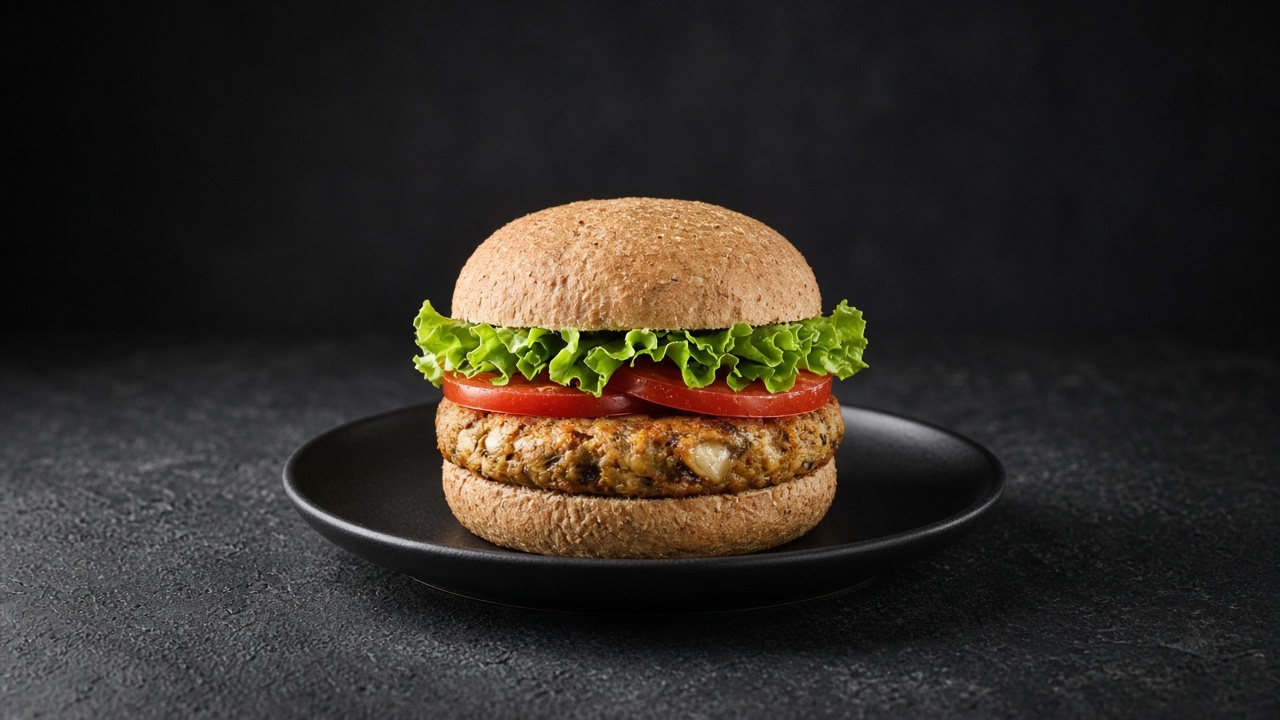
Baharat Mushroom and Turkey Burgers
By Joe
Source: NYT Cooking.
Deeply savoury turkey burgers flavoured with umami-rich roasted mushrooms and warm baharat spice, finished in the oven until tender and juicy.
Always check the labels of the products you use.
Method
- 1
Roast mushrooms. Preheat the oven to 220 °C (200 °C fan). Toss 680 g finely chopped chestnut mushrooms with 30 ml olive oil and ½ tsp fine salt on a lined baking tray and roast for 25-30 minutes, stirring halfway through twice, until they have released their liquid and look dry and browned; set aside to cool.
- 2
Baharat spice. Grind 2 tbsp black peppercorns, 2 tbsp allspice berries and ½ tsp cumin seeds to a powder using a spice grinder. Stir in 1 tsp ground cinnamon and ½ tsp freshly grated nutmeg and store in a small jar.
- 3
Mix. In a large bowl combine 450 g turkey mince, the cooled roasted mushrooms, ½ medium finely chopped onion, 2 finely grated garlic cloves, 15 g chopped flat-leaf parsley, 2 tbsp chopped mint or dill, 2 tbsp chopped coriander, 1 tsp fine salt, 1 tsp of the baharat, ¼ tsp cayenne pepper and 1 large egg. Mix very gently until just combined.
- 4
Shape. Divide the mixture into 6 equal portions and gently shape each into a patty. Set them on an oiled baking tray and chill for at least 30 minutes.
- 5
Sear. Heat 1 tbsp rapeseed or grapeseed oil in a large heavy frying pan over a medium-high heat and sear the patties for 4 minutes on each side, working in batches if necessary, until both sides are well browned.
- 6
Finish in oven. Transfer the seared patties to a lined baking tray and bake in a 220 °C oven (200 °C fan) for 7-8 minutes until the centre reaches 74 °C. Let them rest for 2 minutes before serving.
- 7
Serve. Arrange each patty in a split wholemeal bun with fresh lettuce leaves and sliced tomato.
Storage
The cooled roasted mushrooms keep refrigerated for up to 3 days; uncooked patties freeze well for up to 3 months when wrapped individually. Cool leftovers in a shallow container and refrigerate within 2 hours (within 1 hour on a day above 32°C).
Why this label?
24.3 g protein for 449 kcal = 5.4 g per 100 kcal, so protein gives about 22% of the energy. High protein needs at least 20% (5 g per 100 kcal), the condition in the Annex to EU Regulation (EC) No 1924/2006. How we decide
EU nutrition claims
- Low sugars: 4.1 g sugars per 100 g (limit ≤ 5 g)
Per 100 g of the finished dish, worked out from the nutrition per serving and the lowest likely cooked weight (about 200 g a serving), so the true values are, if anything, lower. Thresholds from the Annex to EU Regulation (EC) No 1924/2006. How we decide
Free sugars
4.4 g per serving
8.8 % of the 50 g daily maximum · 17.6 % of the ideal 25 g
Free sugars under 50 g a day, ideally about 25 g, based on WHO free-sugar guidance (not endorsed by WHO). The share shown is the share of one serving. WHO
Equipment
- 2 rimmed baking trays
- baking paper
- spice grinder
- small jar
- large bowl
- 1-2 large heavy frying pans
- fish slice
- instant-read thermometer
Nutrition per serving Calculated from USDA FoodData Central
| Per serving | Amount |
|---|---|
| Energy | 449 kcal |
| Protein | 24.3 g |
| Carbohydrate | 40.5 g |
| of which sugars | 8.1 g |
| of which free sugars | 4.4 g |
| Fat | 22.6 g |
| of which saturates | 4.5 g |
| Fibre | 4.5 g |
| Salt | 2.36 g |
Protein per 100 kcal
5.4 g meets High protein (≥ 5 g per 100 kcal = 20% of energy, and ≥ 10 g per serving)
Calculated from USDA FoodData Central ingredient values