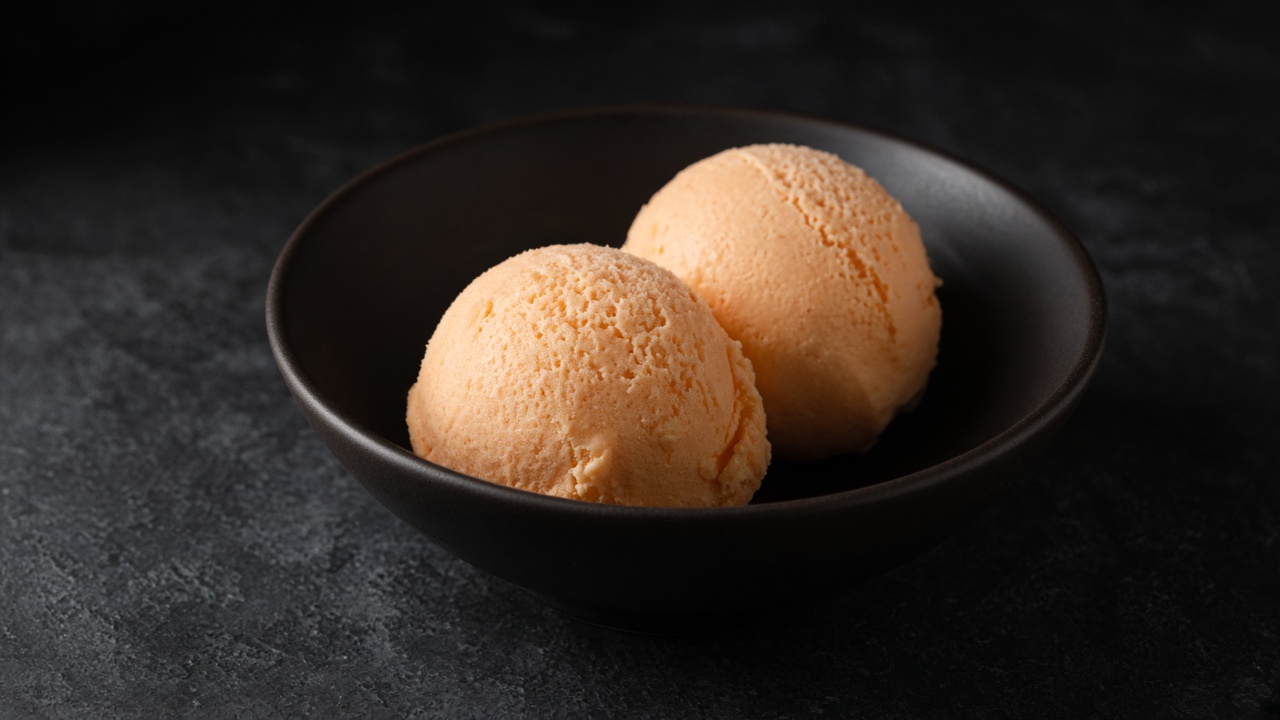
Always check the labels of the products you use.
Method
- 1
Mix. Beat together blood orange juice, zest, cream, corn syrup, plus sugar till sugar is completely dissolved in a big bowl. Mix in salt till it tastes right.
- 2
Chill. Chill mixture in fridge for 2 to 3 hours till very cold if blood oranges were not chilled (see note). Churn mixture according to manufacturer's instructions.
- 3
Finish. Eat at once as soft serve or move to an airtight container plus put in the fridge in freezer for no less than 4 hours for a firmer texture.
Storage
Keep covered in the fridge and use within a few days.
EU nutrition claims
- Low salt: 0.21 g salt per 100 g (limit ≤ 0.3 g)
Per 100 g of the finished dish, worked out from the nutrition per serving and the lowest likely cooked weight (about 112 g a serving), so the true values are, if anything, lower. Thresholds from the Annex to EU Regulation (EC) No 1924/2006. How we decide
Free sugars
29 g per serving
58 % of the 50 g daily maximum · 116 % of the ideal 25 g
Free sugars under 50 g a day, ideally about 25 g, based on WHO free-sugar guidance (not endorsed by WHO). The share shown is the share of one serving. WHO
Equipment
- mixing bowl
- scales
Nutrition per serving Calculated from USDA FoodData Central
| Per serving | Amount |
|---|---|
| Energy | 220 kcal |
| Protein | 1.3 g |
| Carbohydrate | 31.1 g |
| of which sugars | 29.9 g |
| of which free sugars | 29 g |
| Fat | 11 g |
| of which saturates | 6.9 g |
| Fibre | 0.1 g |
| Salt | 0.23 g |
Protein per 100 kcal
0.6 g High protein needs ≥ 5 g per 100 kcal (20% of energy) and ≥ 10 g per serving
Calculated from USDA FoodData Central ingredient values