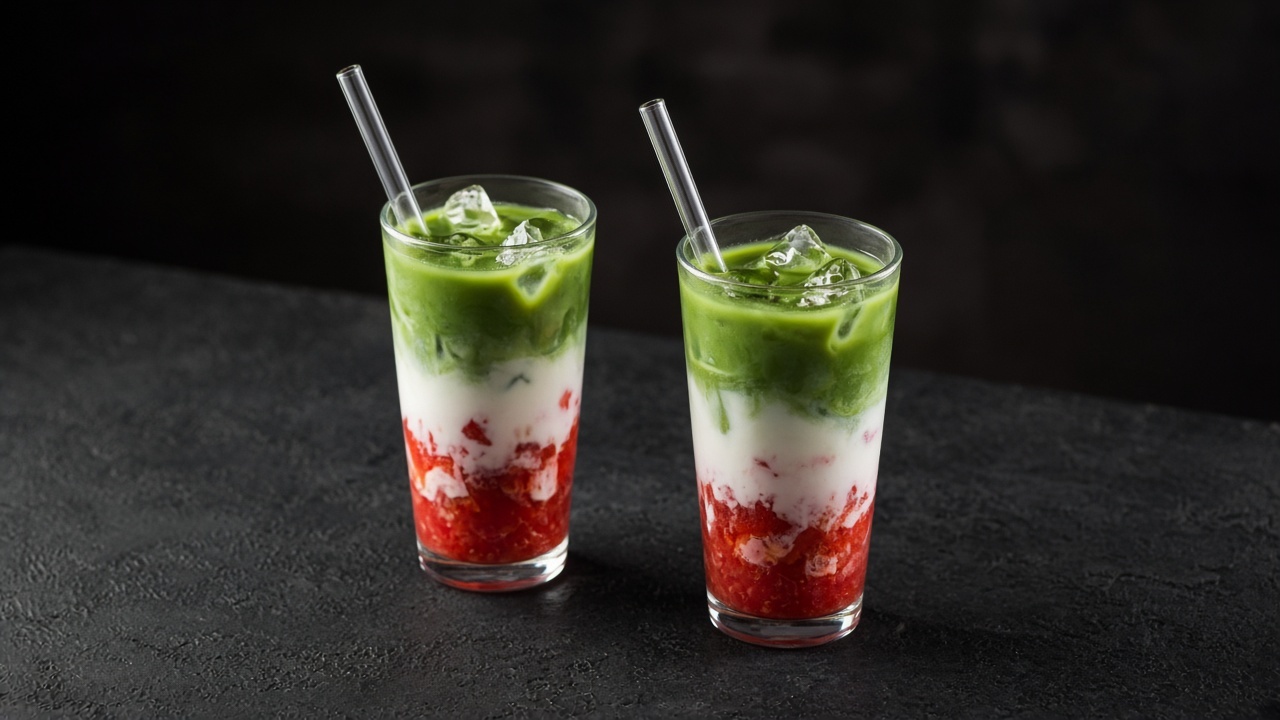
Iced Strawberry Matcha Latte
By Joe
Source: NYT Cooking.
A summery take on the latte: mashed sweet strawberries at the bottom, cold milk in the middle and a vivid float of whisked matcha on top, which you stir together as you drink.
Always check the labels of the products you use.
Method
- 1
Strawberries. Crush the chopped strawberries with the sugar using a fork or masher until pulpy and juicy, then leave them for 5 minutes so the sugar melts into the juice. Prefer it smooth? Pulse them in a blender instead.
- 2
Matcha. Sift the matcha into a small bowl, since it clumps easily. Add a splash of the warm water and rub it into a smooth paste, then add the rest and whisk briskly in a zigzag for about 30 seconds, until frothy with no lumps.
- 3
Build. Divide the strawberries between two tall glasses and fill them halfway with ice. Pour the milk in slowly over the ice so it sits above the red fruit.
- 4
Float. Pour the matcha gently over the back of a spoon so it spreads over the milk in a green layer. Serve with a wide straw and stir before sipping.
Storage
Best drunk straight away. The mashed strawberries keep for 1 day in the fridge, covered. Cool leftovers in a shallow container and refrigerate within 2 hours (within 1 hour on a day above 32°C).
EU nutrition claims
- Source of protein: 4.3 g protein per 100 kcal, about 17% of energy (needs ≥ 12%)
- Low salt: 0.08 g salt per 100 ml (limit ≤ 0.3 g)
Per 100 ml of the finished dish, worked out from the nutrition per serving and the lowest likely cooked weight (about 291 ml a serving), so the true values are, if anything, lower. Thresholds from the Annex to EU Regulation (EC) No 1924/2006. How we decide
Caffeine · Free sugars
- Per serving (1 glass (1 tsp matcha)): no approved value. USDA SR Legacy and Ciqual have no caffeine value for matcha powder. Matcha is the whole ground leaf, so a serving has more caffeine than a cup of brewed green tea (about 29 mg).
- General guideline: EFSA Scientific Opinion on the safety of caffeine (2015): for healthy adults, up to 200 mg in a single dose and up to 400 mg per day do not raise safety concerns. EFSA
4 g per serving
8 % of the 50 g daily maximum · 16 % of the ideal 25 g
Free sugars under 50 g a day, ideally about 25 g, based on WHO free-sugar guidance (not endorsed by WHO). The share shown is the share of one serving. WHO
Equipment
- bowl and fork or potato masher
- small sieve
- small bowl and matcha whisk or mini milk frother
- 2 tall glasses (about 400 ml)
- wide straws
Nutrition per serving Calculated from USDA FoodData Central
| Per serving | Amount |
|---|---|
| Energy | 179 kcal |
| Protein | 7.7 g |
| Carbohydrate | 22.3 g |
| of which sugars | 19.2 g |
| of which free sugars | 4 g |
| Fat | 7.1 g |
| of which saturates | 3.9 g |
| Fibre | 2.8 g |
| Salt | 0.22 g |
Protein per 100 kcal
4.3 g High protein needs ≥ 5 g per 100 kcal (20% of energy) and ≥ 10 g per serving
Calculated from USDA FoodData Central ingredient values