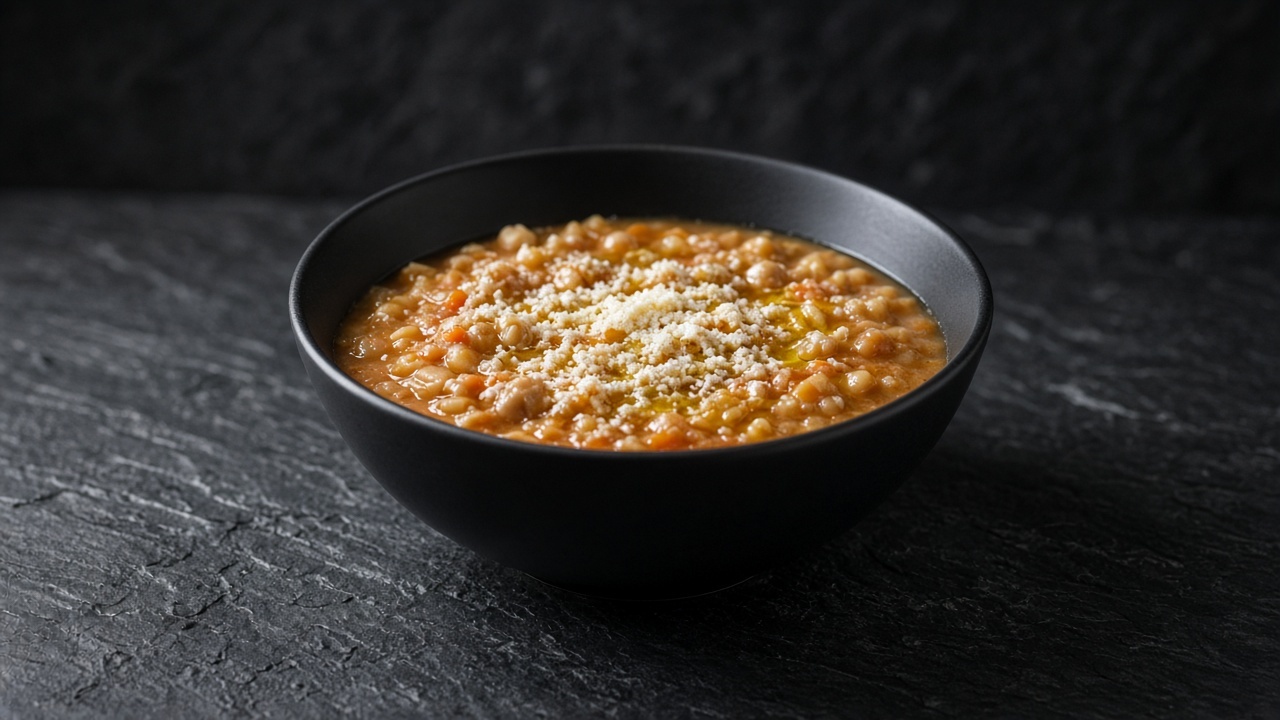
Pasta e Ceci (Pasta and Chickpea Stew with Rosemary)
By Joe
Source: NYT Cooking and America's Test Kitchen.
This follows the classic pasta e fagioli method, but uses chickpeas in place of cannellini or borlotti beans, adds chilli and lemon, wilts in escarole or kale, and leaves out the celery and tomato purée.
Always check the labels of the products you use.
Method
- 1
Soften the vegetables. Warm the olive oil in a large heavy saucepan over medium heat and cook the onion and carrot for 5-6 minutes, until softened but not coloured. Keep the heat gentle so the vegetables sweeten slowly rather than catching and turning bitter.
- 2
Add the aromatics. Stir in the garlic, rosemary and chilli flakes and cook for 1 minute, just until fragrant. Keep stirring at this stage, as garlic and rosemary can turn bitter if left too long over direct heat.
- 3
Add tomatoes and chickpeas. Tip in the crushed tomatoes and chickpeas, then crush about a quarter of the chickpeas against the side of the pot with a spoon or masher. Crushing some of the chickpeas releases their starch into the broth, naturally thickening the stew without any flour or cream.
- 4
Simmer the broth. Pour in the water and add the salt and pepper, then bring to the boil before turning down to a simmer for 10 minutes. This gives the flavours time to come together into a well-seasoned broth before the pasta goes in.
- 5
Cook the pasta. Add the ditalini and simmer for 10-12 minutes, stirring often so it doesn't catch on the bottom, until al dente and most of the liquid has been absorbed. For a brothier, soupier stew, stir in a splash more water towards the end.
- 6
Wilt in the greens. Stir in the escarole, kale or spinach and cook just until wilted, then stir through the lemon juice. The brief heat softens the leaves while keeping their colour and a little bite.
- 7
Serve and finish. Ladle into bowls and finish each with a scattering of pecorino and a drizzle of extra-virgin olive oil. If reheating leftovers, add a splash of water and bring back to a simmer until piping hot throughout (74°C), as the pasta keeps absorbing liquid as it sits.
Storage
Refrigerate in an airtight container for up to 3 days, or freeze for up to 2 months (the pasta softens slightly on thawing). Reheat in a pan with a splash of water, stirring, until piping hot throughout (74°C). Cool leftovers in a shallow container and refrigerate within 2 hours (within 1 hour on a day above 32°C).
EU nutrition claims
- Source of protein: 3.5 g protein per 100 kcal, about 14% of energy (needs ≥ 12%)
- Low sugars: 4.9 g sugars per 100 g (limit ≤ 5 g)
- Source of fibre: 2.4 g fibre per 100 kcal (needs ≥ 1.5 g)
Per 100 g of the finished dish, worked out from the nutrition per serving and the lowest likely cooked weight (about 194 g a serving), so the true values are, if anything, lower. Thresholds from the Annex to EU Regulation (EC) No 1924/2006. How we decide
Free sugars
0.1 g per serving
0.2 % of the 50 g daily maximum · 0.4 % of the ideal 25 g
Free sugars under 50 g a day, ideally about 25 g, based on WHO free-sugar guidance (not endorsed by WHO). The share shown is the share of one serving. WHO
Equipment
- large heavy saucepan or casserole (at least 4 litres)
- potato masher or wooden spoon
- ladle
Nutrition per serving Calculated from USDA FoodData Central
| Per serving | Amount |
|---|---|
| Energy | 489 kcal |
| Protein | 17.2 g |
| Carbohydrate | 64.5 g |
| of which sugars | 9.6 g |
| of which free sugars | 0.1 g |
| Fat | 19.1 g |
| of which saturates | 3.4 g |
| Fibre | 11.5 g |
| Salt | 2.2 g |
Protein per 100 kcal
3.5 g High protein needs ≥ 5 g per 100 kcal (20% of energy) and ≥ 10 g per serving
Calculated from USDA FoodData Central ingredient values