Based on the listed ingredients, none of the 14 major EU allergens. Always check product labels.
Method
- 1
Tea. Steep the tea bags in the boiling water for 4 minutes, take them out, add the cold water and set aside to cool.
- 2
Raspberry syrup. Bring the raspberries, sugar and water to a simmer, crushing the berries with a spoon, and let it bubble for 3 minutes until saucy. A short cook releases the juice and colour without a jammy taste.
- 3
Strain. Press the mixture through a fine sieve to catch the seeds, then stir in the lime juice and leave to cool.
- 4
Mix. Stir the syrup into the cooled tea, taste for sweetness and add a little more sugar if needed, then chill.
- 5
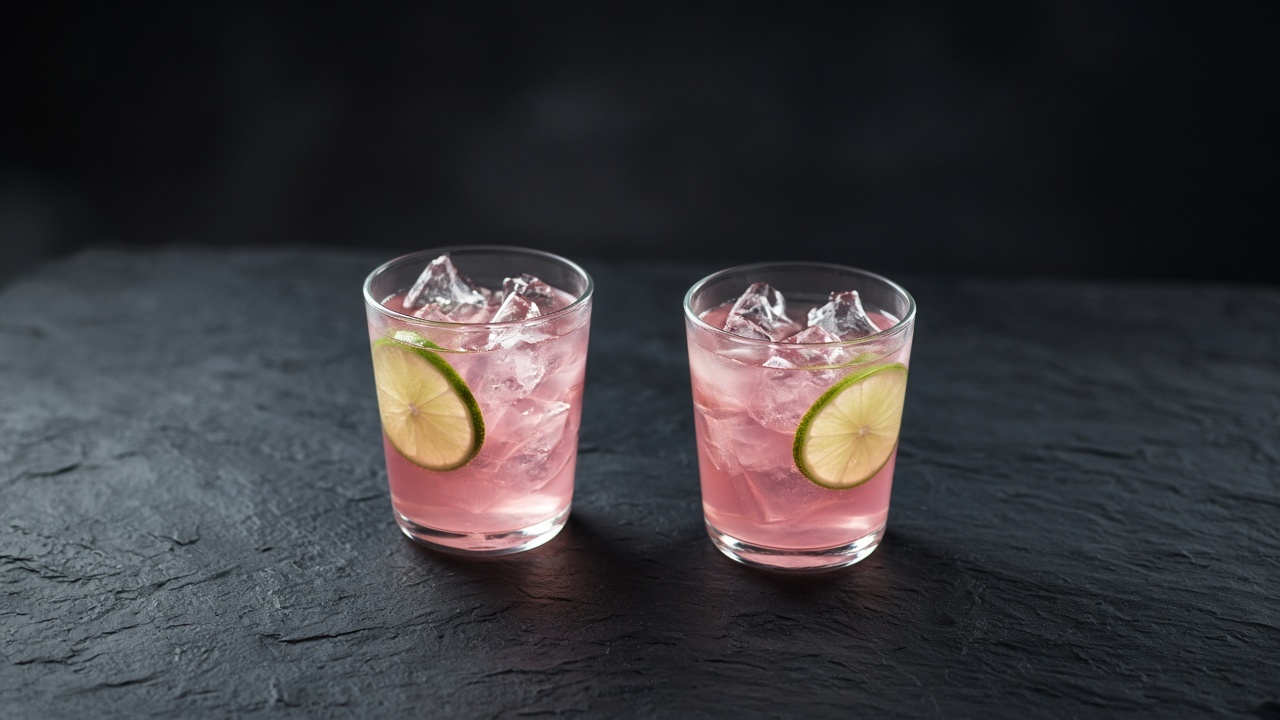
Serve. Pour over ice and add slices of lime.
Storage
Keeps 2 days in the fridge; stir before serving. Cool leftovers in a shallow container and refrigerate within 2 hours (within 1 hour on a day above 32°C).
EU nutrition claims
- Low fat: 0.1 g fat per 100 ml (limit ≤ 1.5 g)
- Low saturated fat: 0 g saturated fat per 100 ml, 0% of energy (limits ≤ 0.75 g and ≤ 10%)
- Low salt: 0.01 g salt per 100 ml (limit ≤ 0.3 g)
Per 100 ml of the finished dish, worked out from the nutrition per serving and the lowest likely cooked weight (about 248 ml a serving), so the true values are, if anything, lower. Thresholds from the Annex to EU Regulation (EC) No 1924/2006. How we decide
Caffeine · Free sugars
- Per serving: at least 25 mg caffeine (serving: 1 glass (about 125 ml brewed tea)). Source: about 125 ml brewed per serving × USDA FDC SR Legacy #173227 (brewed black tea, 20 mg/100 g) This brew uses more tea per ml than standard brewed tea, so the real amount is likely higher..
- Scaling: making more servings does not change the caffeine in each serving; what counts is how many servings you drink in a day. 1 serving: 25 mg · 2 servings: 50 mg · 3 servings: 75 mg · 4 servings: 100 mg.
- General guideline: EFSA Scientific Opinion on the safety of caffeine (2015): for healthy adults, up to 200 mg in a single dose and up to 400 mg per day do not raise safety concerns. 1 serving = 6 % of 400 mg. EFSA
19 g per serving
38 % of the 50 g daily maximum · 76 % of the ideal 25 g
Free sugars under 50 g a day, ideally about 25 g, based on WHO free-sugar guidance (not endorsed by WHO). The share shown is the share of one serving. WHO
Equipment
- small saucepan
- fine sieve
- large jug
- 4 glasses
Nutrition per serving Calculated from USDA FoodData Central
| Per serving | Amount |
|---|---|
| Energy | 105 kcal |
| Protein | 0.7 g |
| Carbohydrate | 26.7 g |
| of which sugars | 21.2 g |
| of which free sugars | 19 g |
| Fat | 0.3 g |
| of which saturates | 0 g |
| Fibre | 3.3 g |
| Salt | 0.02 g |
Protein per 100 kcal
0.7 g High protein needs ≥ 5 g per 100 kcal (20% of energy) and ≥ 10 g per serving
Calculated from USDA FoodData Central ingredient values