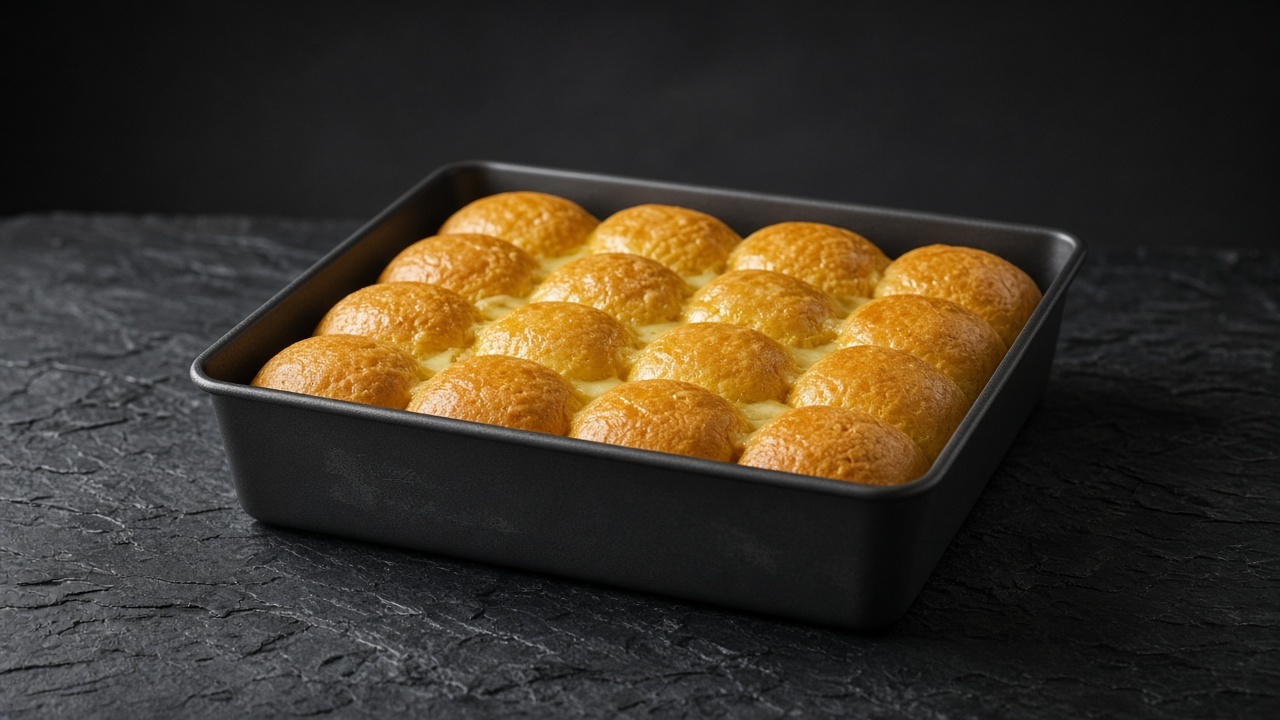
Sweet Potato Buttermilk Pull-Apart Rolls
By Joe
Source: NYT Cooking.
Soft, orange-tinged pull-apart rolls made with mashed sweet potato and tangy buttermilk.
Always check the labels of the products you use.
Method
- 1
Sweet potato. Simmer the sweet potato in unsalted water 10-13 min, until very soft. Drain well, mash in a large bowl, then beat in the buttermilk and 55 g butter until fairly smooth.
- 2
Dough. Add the flour, yeast, sugar, eggs and salt and mix, then knead 8 min by machine on medium-low (or by hand on a lightly floured worktop), until smooth, elastic and slightly sticky.
- 3
Rise. Put the dough in a buttered bowl, cover and leave about 1 1/2 h in a warm place, until more than doubled.
- 4
Shape. Butter the tin. Turn out the dough, divide it into 15 pieces and roll each into a smooth ball. Set them in the tin in 3 rows of 5, cover and leave 45 min, until they fill the tin.
- 5
Bake. Heat the oven to 190 °C (170 °C fan). Brush with half the melted butter and bake 22-26 min, until deep orange-gold; the centre roll reads 88-90 °C.
- 6
Finish. Brush with the remaining butter as they come out and cool 10 min before pulling apart.
Storage
Keep cooled rolls in an airtight bag at room temperature for up to 2 days. Rewarm at 180 °C for 5 min; freeze for up to 1 month.
Free sugars
1.7 g per serving
3.4 % of the 50 g daily maximum · 6.8 % of the ideal 25 g
Free sugars under 50 g a day, ideally about 25 g, based on WHO free-sugar guidance (not endorsed by WHO). The share shown is the share of one serving. WHO
Equipment
- large bowl or stand mixer with dough hook
- cling film or a clean tea towel
- pastry brush
- wire rack
- probe thermometer (optional)
- small saucepan
- potato masher or fork
- 23 x 33 cm baking tin
Nutrition per serving Calculated from USDA FoodData Central
| Per serving | Amount |
|---|---|
| Energy | 200 kcal |
| Protein | 5 g |
| Carbohydrate | 30.5 g |
| of which sugars | 2.7 g |
| of which free sugars | 1.7 g |
| Fat | 6.2 g |
| of which saturates | 3.6 g |
| Fibre | 1.4 g |
| Salt | 0.65 g |
Protein per 100 kcal
2.5 g High protein needs ≥ 5 g per 100 kcal (20% of energy) and ≥ 10 g per serving
Calculated from USDA FoodData Central ingredient values