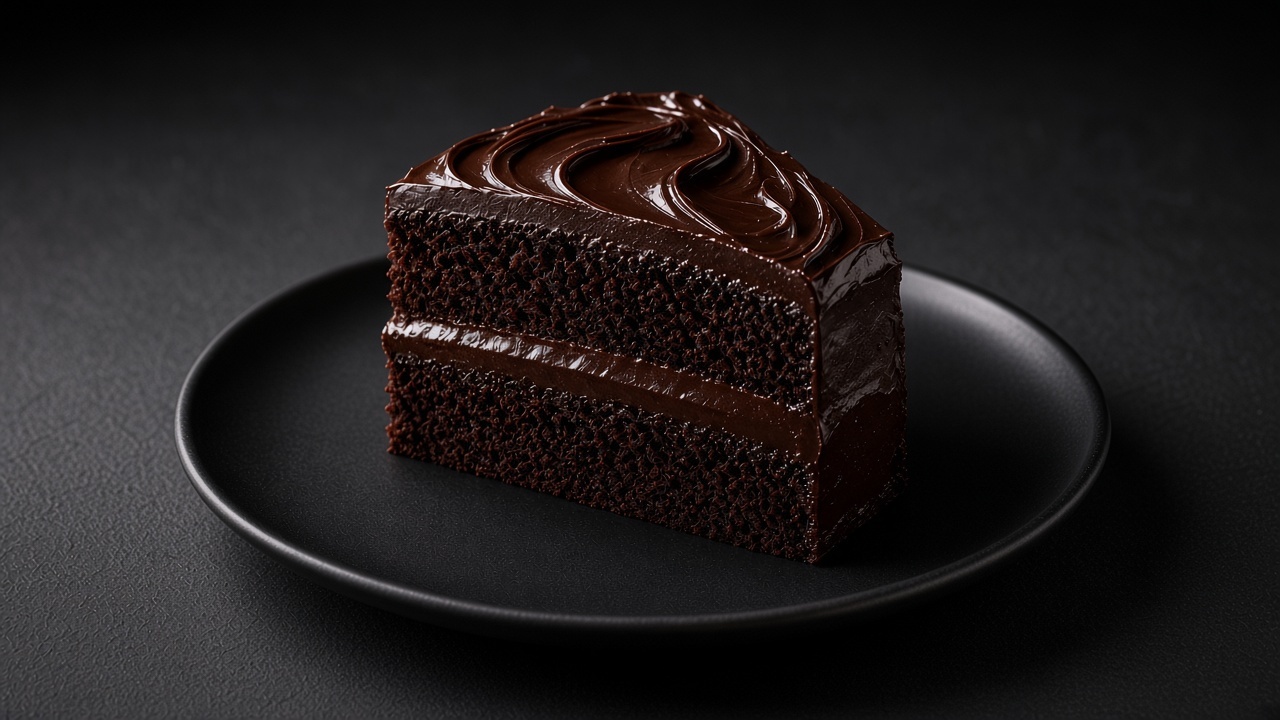
Gluten-Free Chocolate Layer Cake
By Joe
Source: NYT Cooking, Serious Eats and King Arthur Baking.
Our moist oil-and-coffee chocolate layer cake made with a 1:1 gluten-free flour blend and gluten-free baking powder, finished with glossy chocolate ganache.
Always check the labels of the products you use.
Method
- 1
Heat the Oven. Set the oven to 175°C (155°C fan) and let it heat for at least 20 minutes before baking, with a shelf positioned in the middle.
- 2
Bloom the Cocoa. Whisk the cocoa powder into the hot coffee until smooth, then leave it for 5 minutes. Blooming cocoa in hot liquid like this draws out more of its flavour than simply stirring it into the batter dry.
- 3
Mix Wet and Dry Separately. Whisk the gluten-free flour, sugar, bicarbonate of soda, baking powder and salt together in a large bowl. In a second bowl, whisk the oil, eggs, buttermilk and vanilla, then whisk in the cocoa mixture.
- 4
Combine the Batter. Pour the wet mixture into the dry and whisk just until smooth; the batter will be noticeably thin, which is normal for this style of cake. Overmixing here is the main way to end up with a tough, rubbery crumb instead of a moist one.
- 5
Bake the Layers. Divide the batter between the two tins and bake for 30-35 minutes, until the tops spring back to the touch and a skewer comes out with just a few moist crumbs clinging to it.
- 6
Cool Completely. Cool the cakes in their tins for 10 minutes, then turn out onto a rack and leave to cool fully before icing.
- 7
Make the Ganache. Bring the cream just to the boil and pour it over the chopped chocolate. Leave for 3 minutes, then stir from the centre outwards until glossy and smooth, before stirring in the butter and salt.
- 8
Thicken the Ganache. Leave the ganache at room temperature for 1-1½ hours, stirring occasionally, until it's thick enough to spread, holding its shape rather like soft peanut butter. Whip it for 30 seconds with the mixer if you'd like a lighter, fluffier frosting.
- 9
Assemble. Sandwich the cooled layers with a third of the ganache, then spread the remainder over the top and sides to finish.
Storage
Keep covered at room temperature for up to 2 days, or in the fridge for up to 5 days, bringing slices back to room temperature before serving. The unfrosted sponges freeze well, wrapped tightly, for up to 2 months.
Caffeine · Free sugars
- Per serving: about 8 mg caffeine (serving: 1 of 12 servings). Source: 240 ml brewed coffee × USDA FDC SR Legacy #171890 (brewed coffee, 40 mg/100 g); divided by 12 servings.
- Scaling: making more servings does not change the caffeine in each serving; what counts is how many servings you drink in a day. 1 serving: 8 mg · 2 servings: 16 mg · 3 servings: 24 mg · 4 servings: 32 mg.
- General guideline: EFSA Scientific Opinion on the safety of caffeine (2015): for healthy adults, up to 200 mg in a single dose and up to 400 mg per day do not raise safety concerns. 1 serving = 2 % of 400 mg. EFSA
33.1 g per serving
66.2 % of the 50 g daily maximum · 132.4 % of the ideal 25 g
Free sugars under 50 g a day, ideally about 25 g, based on WHO free-sugar guidance (not endorsed by WHO). The share shown is the share of one serving. WHO
Equipment
- two 20 cm round cake tins (5 cm deep), greased and base-lined
- 2 large bowls and a whisk
- saucepan
- stand mixer or electric hand whisk
- wire racks
- palette knife
Nutrition per serving Calculated from USDA FoodData Central
| Per serving | Amount |
|---|---|
| Energy | 579 kcal |
| Protein | 7.1 g |
| Carbohydrate | 60.1 g |
| of which sugars | 35 g |
| of which free sugars | 33.1 g |
| Fat | 36 g |
| of which saturates | 16.2 g |
| Fibre | 4.7 g |
| Salt | 1.04 g |
Protein per 100 kcal
1.2 g High protein needs ≥ 5 g per 100 kcal (20% of energy) and ≥ 10 g per serving
Calculated from USDA FoodData Central ingredient values