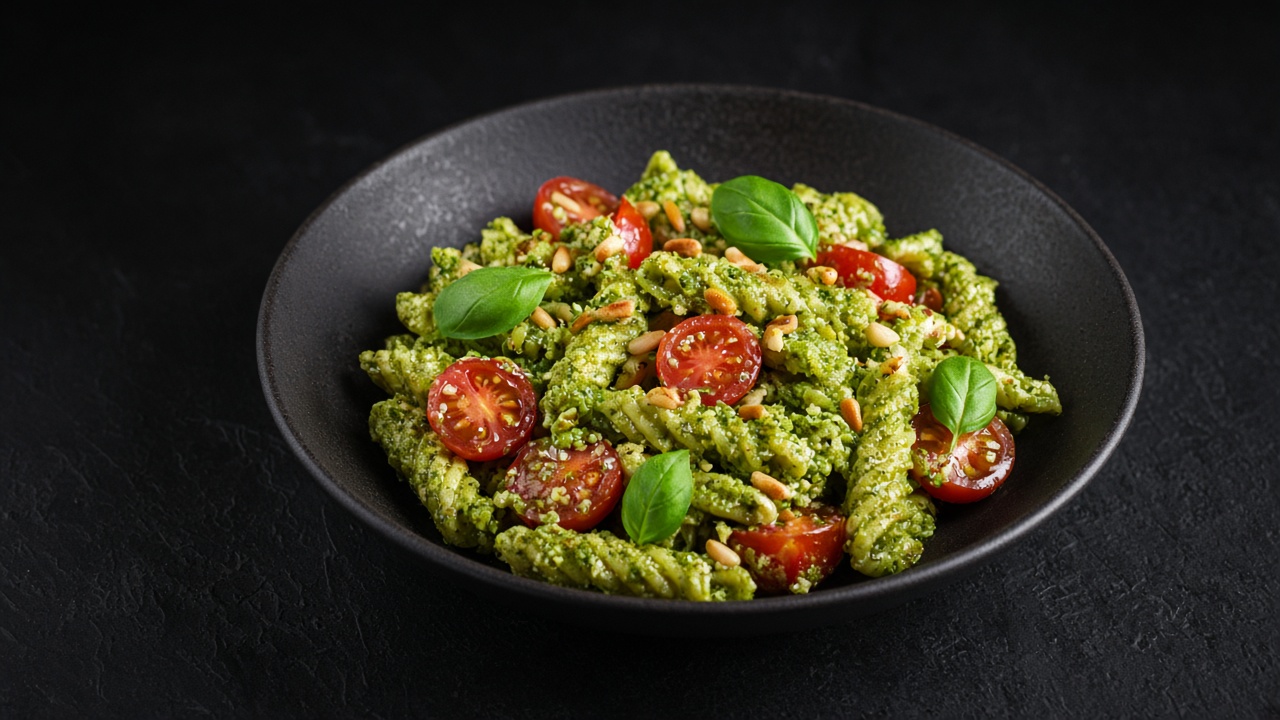
Green Pesto Pasta Salad with Cherry Tomatoes and Rocket
By Joe
Source: America's Test Kitchen and NYT Cooking.
This vibrant variant follows the same cook-and-toss method as our mozzarella and olive pasta salad, but swaps the oil-and-vinegar dressing, mozzarella, peppers and olives for a basil, spinach and toasted pine nut pesto made silky with a little mayonnaise, finished with cherry tomatoes and peppery rocket.
Always check the labels of the products you use.
Method
- 1
Toast the Pine Nuts. Tip the pine nuts into the dry frying pan and toast over medium-low heat for 4-5 minutes, shaking the pan often, until they turn an even pale gold. Keep the heat gentle and your eye on the pan, since pine nuts have a high oil content and can burn within seconds once they start to colour. Set 2 tbsp aside for scattering later and leave the rest to cool.
- 2
Cook and Cool the Pasta. Once the nuts are toasting, bring 4 litres of water to the boil in the large pot, stir in the salt, and cook the pasta for 1 minute longer than the packet time; the extra minute makes sure it's fully tender before it cools and firms up again. Scoop out 120 ml of the starchy cooking water and set it aside, then drain the pasta, toss it with the 1 tbsp of oil so the pieces don't stick together, and spread it on the tray to cool for 20 minutes.
- 3
Blend the Pesto. In the food processor, blitz the cooled toasted pine nuts with the garlic until finely chopped, then add the basil, spinach and lemon juice and pulse a few times. With the motor running, pour in the olive oil in a steady stream until the mixture turns a bright, loose green. Pulse in the grated hard cheese, mayonnaise, salt and pepper; the spinach keeps the colour vivid, while the mayonnaise gives the pesto a creamy body that clings to the pasta even once it's cold.
- 4
Toss Pasta with Pesto. Back in the large bowl, toss the cooled pasta with the pesto until every piece is coated, then loosen it with 2-4 tbsp of the reserved cooking water, a little at a time, until it turns glossy rather than clumped. The starch left in that water helps the sauce spread evenly without needing any extra oil.
- 5
Add Tomatoes and Rocket. Last of all, fold the halved cherry tomatoes and rocket through the pasta just before serving, so the rocket keeps its peppery crunch instead of wilting. Scatter the reserved toasted pine nuts over the top for extra bite and colour. A quick taste here lets you check whether it needs more salt or lemon.
Storage
Best eaten within a few hours of making. If needed, keep covered in the fridge for up to 1 day, adding the rocket only when you're ready to serve so it stays crisp. Cool leftovers in a shallow container and refrigerate within 2 hours (within 1 hour on a day above 32°C).
EU nutrition claims
- Low sugars: 2.6 g sugars per 100 g (limit ≤ 5 g)
Per 100 g of the finished dish, worked out from the nutrition per serving and the lowest likely cooked weight (about 136 g a serving), so the true values are, if anything, lower. Thresholds from the Annex to EU Regulation (EC) No 1924/2006. How we decide
Free sugars
0.2 g per serving
0.4 % of the 50 g daily maximum · 0.8 % of the ideal 25 g
Free sugars under 50 g a day, ideally about 25 g, based on WHO free-sugar guidance (not endorsed by WHO). The share shown is the share of one serving. WHO
Equipment
- large pot (at least 5 litres)
- colander
- large rimmed baking tray
- large bowl
- whisk or jam jar with a lid
- chopping board and knife
- food processor
- small frying pan
Nutrition per serving Calculated from USDA FoodData Central
| Per serving | Amount |
|---|---|
| Energy | 494 kcal |
| Protein | 13.2 g |
| Carbohydrate | 53.9 g |
| of which sugars | 3.6 g |
| of which free sugars | 0.2 g |
| Fat | 25.6 g |
| of which saturates | 4.1 g |
| Fibre | 3.3 g |
| Salt | 0.86 g |
Protein per 100 kcal
2.7 g High protein needs ≥ 5 g per 100 kcal (20% of energy) and ≥ 10 g per serving
Calculated from USDA FoodData Central ingredient values