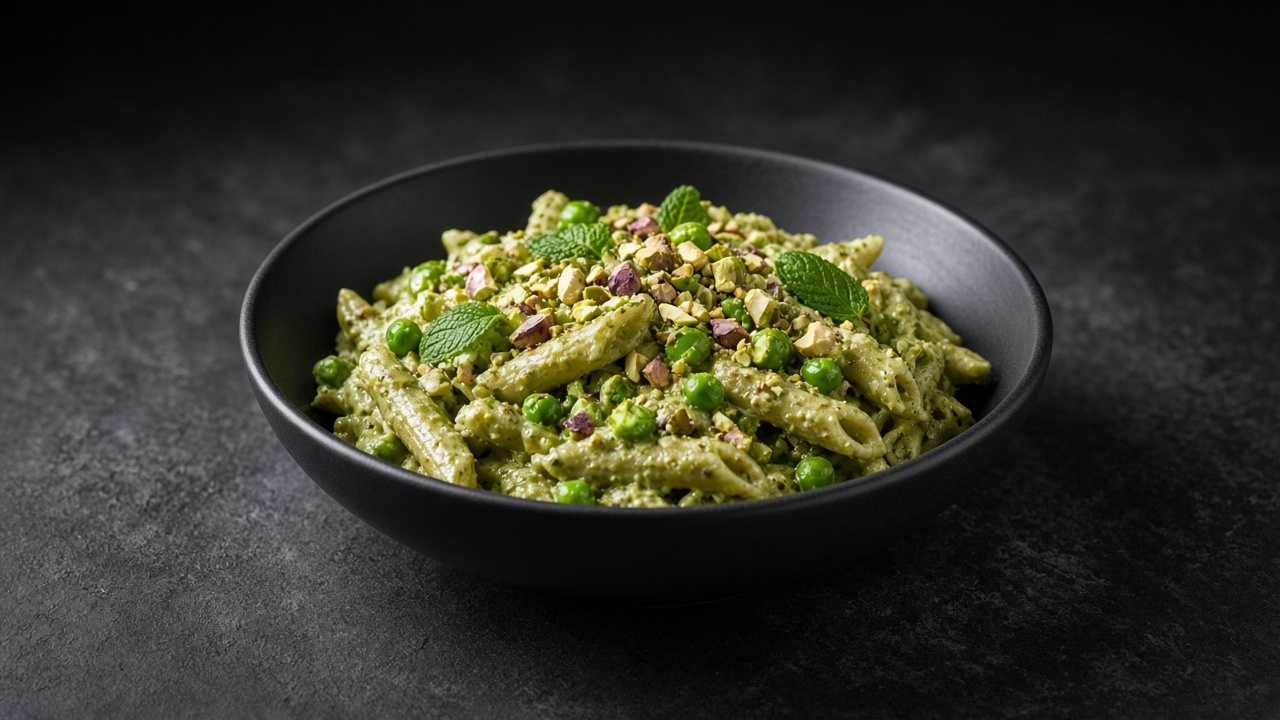
Lemony Pea and Pistachio Pesto Pasta Salad
By Joe
Source: America's Test Kitchen.
Penne in a creamy, bright green pesto of peas, ricotta and pistachios with lemon zest, then finished with fresh mint and more pistachios.
Always check the labels of the products you use.
Method
- 1
Cook the pasta. Cook the pasta in the salted water until just past al dente. Scoop out 120 ml of the water, then drain, rinse cold and shake dry.
- 2
Blend the pesto. Blend half the peas with the ricotta, pistachios, cheese, garlic, lemon zest and juice, oil, pepper and 60 ml of the pasta water until smooth.
- 3
Combine. Toss the pasta with the pesto and remaining whole peas, loosening with more pasta water if thick.
- 4
Finish. Scatter with mint and chopped pistachios and serve at room temperature.
Storage
Keeps covered in the fridge for up to 2 days; loosen with a splash of water or oil and check the seasoning before serving. Not suitable for freezing. Cool leftovers in a shallow container and refrigerate within 2 hours (within 1 hour on a day above 32°C).
EU nutrition claims
- Source of protein: 3.3 g protein per 100 kcal, about 13% of energy (needs ≥ 12%)
- Low sugars: 3.6 g sugars per 100 g (limit ≤ 5 g)
- Low salt: 0.21 g salt per 100 g (limit ≤ 0.3 g)
Per 100 g of the finished dish, worked out from the nutrition per serving and the lowest likely cooked weight (about 113 g a serving), so the true values are, if anything, lower. Thresholds from the Annex to EU Regulation (EC) No 1924/2006. How we decide
Free sugars
0.1 g per serving
0.2 % of the 50 g daily maximum · 0.4 % of the ideal 25 g
Free sugars under 50 g a day, ideally about 25 g, based on WHO free-sugar guidance (not endorsed by WHO). The share shown is the share of one serving. WHO
Equipment
- large pot (at least 5 litres)
- colander
- food processor or blender
- large mixing bowl
- rubber spatula
Nutrition per serving Calculated from USDA FoodData Central
| Per serving | Amount |
|---|---|
| Energy | 450 kcal |
| Protein | 14.8 g |
| Carbohydrate | 58.8 g |
| of which sugars | 4.1 g |
| of which free sugars | 0.1 g |
| Fat | 17.6 g |
| of which saturates | 3.5 g |
| Fibre | 4.9 g |
| Salt | 0.24 g |
Protein per 100 kcal
3.3 g High protein needs ≥ 5 g per 100 kcal (20% of energy) and ≥ 10 g per serving
Calculated from USDA FoodData Central ingredient values