Always check the labels of the products you use.
Method
- 1
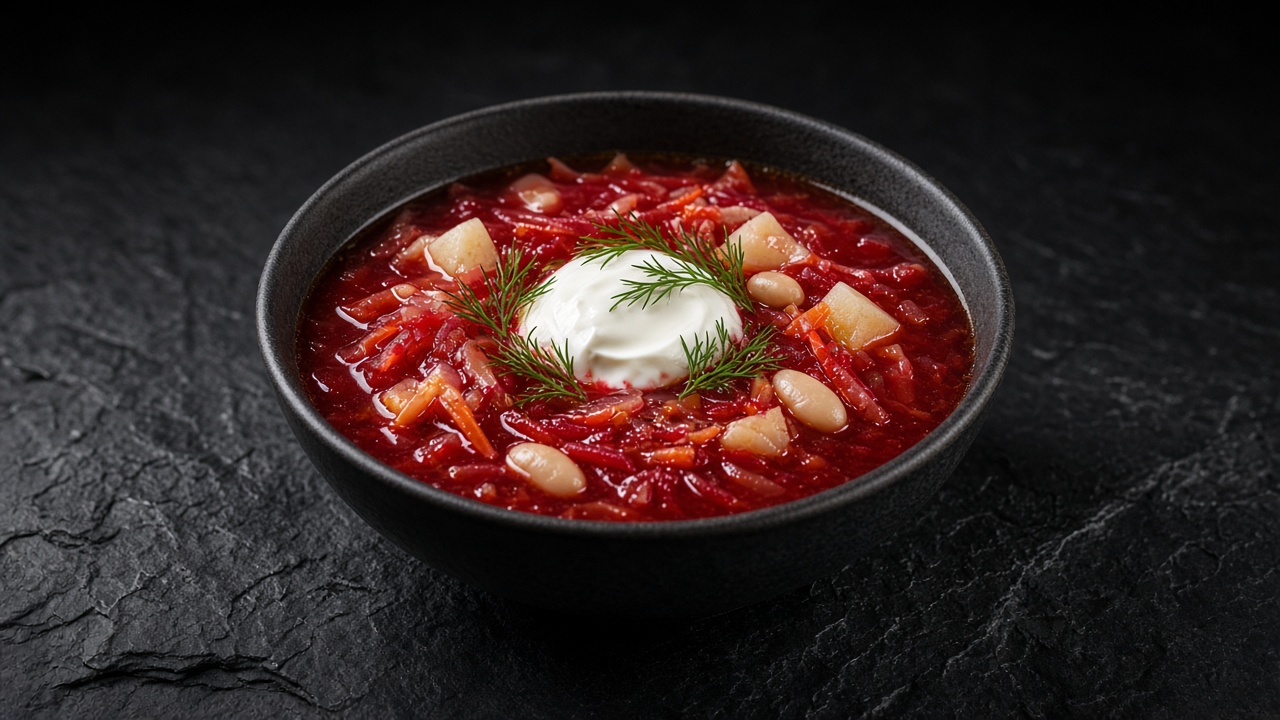
Finish. Sauté onions, carrots, and beets over a mid-sized flame in the olive oil using a pinch of salt in a big soup pot, reserving a little amount of raw beet to grate plus tip in near the end to enliven the color. In this meantime, bring the vegetable stock in order to a boil. Tip in the shredded cabbage and the hot stock when the vegetables are soft (around 5 minutes). Bring to the boil and simmer 15-25 minutes, till the vegetables are tender. Tip in the set-aside grated beet with a few minutes left. Taste and add salt if it needs it with salt and pepper, next squeeze in this lemon juice, aiming for a pleasing yet subtle sour taste. Serve using freshly ground black pepper, a dollop of sour cream, plus chopped parsley, if wanted.
Storage
Keep covered and eat within a few days; freeze leftovers if the dish allows it.
EU nutrition claims
- Low fat: 2.1 g fat per 100 g (limit ≤ 3 g)
- Low saturated fat: 0.3 g saturated fat per 100 g, 5.8% of energy (limits ≤ 1.5 g and ≤ 10%)
- Low sugars: 4.1 g sugars per 100 g (limit ≤ 5 g)
- High fibre: 3.8 g fibre per 100 kcal (needs ≥ 3 g)
Per 100 g of the finished dish, worked out from the nutrition per serving and the lowest likely cooked weight (about 260 g a serving), so the true values are, if anything, lower. Thresholds from the Annex to EU Regulation (EC) No 1924/2006. How we decide
Free sugars
0 g per serving
0 % of the 50 g daily maximum · 0 % of the ideal 25 g
Free sugars under 50 g a day, ideally about 25 g, based on WHO free-sugar guidance (not endorsed by WHO). The share shown is the share of one serving. WHO
Equipment
- mixing bowl
- scales
- saucepan
Nutrition per serving Calculated from USDA FoodData Central
| Per serving | Amount |
|---|---|
| Energy | 125 kcal |
| Protein | 3 g |
| Carbohydrate | 18 g |
| of which sugars | 10.7 g |
| of which free sugars | 0 g |
| Fat | 5.4 g |
| of which saturates | 0.8 g |
| Fibre | 4.8 g |
| Salt | 1.7 g |
Protein per 100 kcal
2.4 g High protein needs ≥ 5 g per 100 kcal (20% of energy) and ≥ 10 g per serving
Calculated from USDA FoodData Central ingredient values